Babies, toddlers, infants… the work of growing
At birth the child begins a journey towards an awareness of needs Montessori recognized that all the child’s experiences from the personality. She charged her teachers to bring clarity to the child’s experiences. Infants know what they need, alert the adults around them with their cries, and trust that they will be met. Montessori encouraged parents to talk to the child through each diaper charge and feeding and to give language to their needs, to bring them into focus.
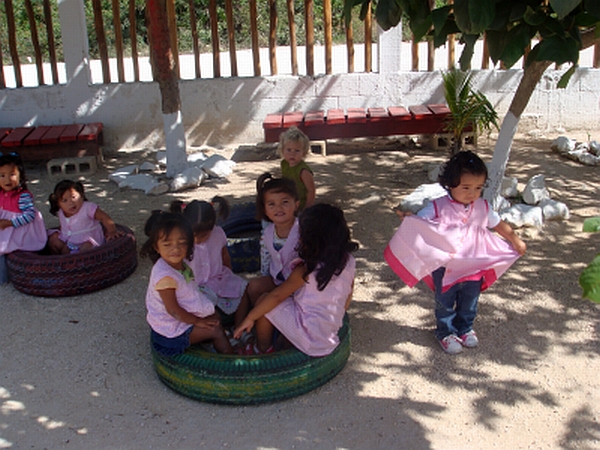 Montessori infant/toddler communities create a space for the child to learn how to care for their own needs independently. All of the care of the self-activities wiping noses, combing hair, self-feeding, reinforces that they have needs and gives them the skill to meet them. With repetition and practice they slowly gain more and more confidence in their skills of self-reliance. In addition, practical life exercises more he child’s reach beyond himself to the care of the environment: plants, arterial, etc. through grace and courtesy adults guide the children to notice the needs of others in their community. Before long, this develops into empathy, and the small child learns to offer their friends tissue of hold the door open for her.
As they get older, Otoch Paal students expand their skills and their awareness to the more expansive environment and those in it. The beginning primary child continues to work on the skills they began in the infant/toddler community. As they grow, the children show a more mature interest in the outcome and result of these exercises. Practical life activities are done for practical reasons: watering plants because they need water, washing tables because they are dirty. Students help younger children because they need and request help.
When the child arrives in the elementary class she knows her needs, her peer’s needs and how to meet them. She has the skill to care for the self, the environment and, if need be, her friends. The child is confident to communicate her own needs for help. The elementary trained adult introduces the fundamental needs of humans and the Story of Human Beings. The chart of fundamental needs outlines the basic things that everyone must have to live, regardless of geography or culture. These two impressionistic presentations place an awareness of needs on the global stage.
Would you like to become a Montessori Guide and live the joy of Riviera Maya? CURSOS AMI EN CANCÚN
 Los comentarios están cerrados.
The Forgotten Citizen
Parts from a Letter Written in 1947 by María Montessori and Sent to all Governments
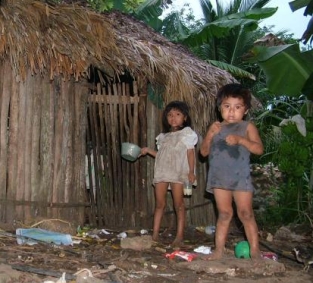 My life has been spent in the research of truth. Through study of children I have scrutinised human nature at its origin both in the East and the West and although it is forty years now since I began my work, childhood still seems to me an inexhaustible source of revelations and – let me say – of hope.
Childhood has shown me that all humanity is one. All children talk, no matter what their race or their circumstances or their family, more or less at the same age; they walk, change their teeth, etc. at certain fixed periods of their life. In other aspects also, especially in the psychical field, they are just as similar, just as susceptible.
Children are the constructors of men whom they build, taking from the environment language, religion, customs and the peculiarities not only of the race, not only of the nation, but even of a special district in which they develop.
Childhood constructs with what it finds. If the material is poor, the construction is also poor. As far as civilisation is concerned the child is at the level of the food-gatherers.
In order to build himself, he has to take by chance, whatever he finds in the environment.
The child is the forgotten citizen, and yet, if statesmen and educationists once came to realize the terrific force that is in childhood for good or for evil, I feel they would give it priority above everything else.
 All problems of humanity depend on man himself; if man is disregarded in his construction, the problems will never be solved.
No child is a Bolshevist or a Fascist or a Democrat; they all become what circumstances or the environment make them.
In our days when in spite of the terrible lessons of two world wars, the times ahead loom as dark as ever before, I feel strongly that another field has to be explored, besides those of economics and ideology. It is the study of MAN – not of adult man on whom every appeal is wasted. He, economically insecure, remains bewildered in the maelstrom of conflicting ideas and throws himself now on this side, now on that. Man must be cultivated from the beginning of life when the great powers of nature are at work. It is then that one can hope to plan for a better international understanding.

Los comentarios están cerrados.
A decalogue by Maria Montessori
1. Never touch the child unless invited by him (in some form or the other).
2. Never speak ill of the child in his presence or absence.
3. Concentrate on strengthening and helping the development of what is good in the child so that its presence may leave less and less space for evil.
4. Be active in preparing the environment. Take meticulous and constant care of it. Help the child establish constructive relations with it. Show the proper place where the means of development are kept and demonstrate their proper use.
5. Be ever ready to answer the call of the child who stands in need of you and always listen and respond to the child who appeals to you.
6. Respect the child who makes a mistake and can then or later correct himself, but stop firmly and immediately any misuse of the environment and any action which endangers the child, his development or others.
7. Respect the child who takes rest or watches others working or ponders over what he himself has done or will do. Neither call him, nor force him to other forms of activity.
8. Help those who are in search of activity and cannot find it.
9. Be untiring in repeating presentations to the child who refused them earlier, in helping the child acquire what is not yet his own and overcome imperfections. Do this by animating the environment with care, with restraint and silence, with mild words and loving presence. Make your ready presence felt to the child who searches and hide from the child who has found.
10. Always treat the child with the best of good manners and offer him the best you have in yourself and at your disposal.
Los comentarios están cerrados.
When grace and courtesy prevail
Montessori philosophy focuses on the education and development of the whole child.
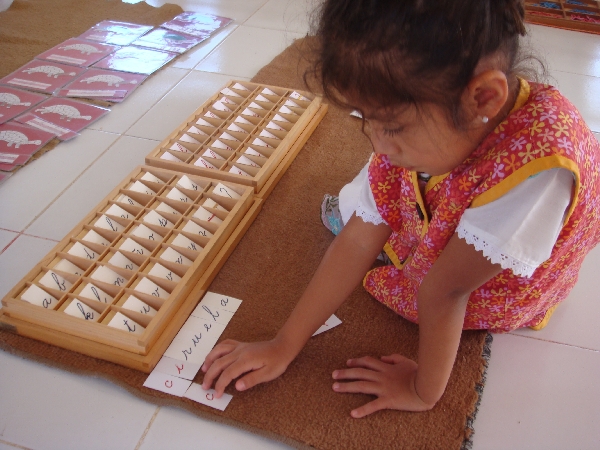
One of the difference ways of teaching in a Montessori classrooms are the daily lessons and practice in Grace and Courtesy toward each other.
Children learn to love each other and to respect their environment by doing it in a natural way. Adults may think these are “rules” for the child is just a style of life. Some lessons in Grace and Courtesy are:
Giving eye contact
One person speaks at a time
Making requests, instead of demands (Would you be willing to…?)
Practice giving and receiving compliments
Saying please and thank you
Holding the door and gate for one another
Waiting turns in line patiently
Asking someone permission before helping, rather than assuming they cannot do it
Coughing into the arm
Introducing self and practicing greetings
Answering the telephone
Frequent hand washing
Working quietly
Maintenance of our classroom and outdoor environment
Picking up litter around school grounds
Stopping the game at recess when someone falls down and offering help up
Loading the school bus back to front and unloading from front to back
How to carry a chair safely and in silence
How to sit properly in the clasroom or anywhere else
The importance of being quiet at the theater during a live performance
Being respectful of nature
Being respectful of ourselves and others
Table manners
How to join in a game
How to include someone in a game
How to follow the rules in a game
How to take turns
Helping someone when they are hurt
Understanding and respecting that different cultures have different traditions and customs
When children understan that being polite, kind, helpful, respectful, and courteous is always in everyone’s best interest and brings happines for everyone.
Los comentarios están cerrados.
Hello from sunny Mexico!
Written by Anne Gayley Gabbert
I am Ana (or Anne), the English teacher at Otoch Paal Community Montessori School in Akumal, Mexico. Akumal is in the state of Quintana Roo on the Yucatan peninsula. We are 62 miles from the city of Cancun, one mile from the Caribbean Sea, and almost 1,500 miles due south of Naperville and Chicago! Check on the map — you’ll see!
There are 85 children at our school and we all enjoy the wonderful warm weather here the whole year round. Many of the families in this area of Mexico are also of Mayan descent, and so are some of our children at school. The Mayan language is different from Spanish so when I am teaching the children English, for some of them it is actually the third language they are learning! It is believed that the Mayan language has been spoken for almost 5,000 years.
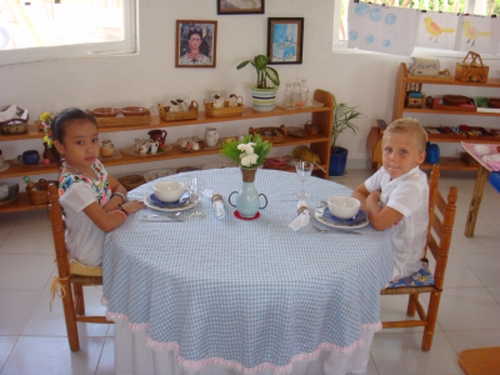
We live in a beautiful place and many people from all over the world come to visit. A lot of the parents of students in our school work in hotels or resorts, and sometimes we go on field trips to practice our table manners and learn how to eat in restaurants in our fancy clothes. Here is a picture of all of us in our traditional Yucatecan dresses and outfits for a “Desayuno Elegante” (elegant breakfast).
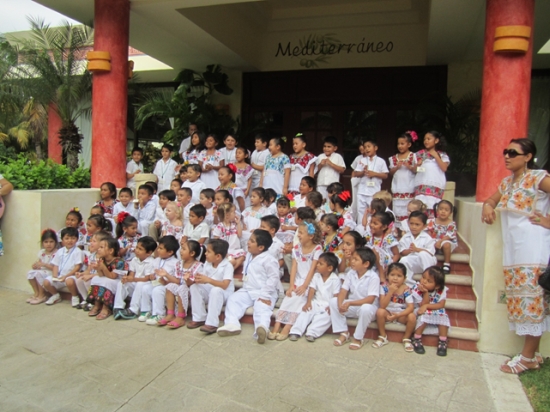
In the Mayan language, Akumal means “Place of the Turtle.” This section of the Caribbean Sea is a turtle sanctuary, which means they are protected and safe here. The sea turtle nesting season starts in May, and it will go on until October. We will all be very Leer el resto de esta entrada »
Los comentarios están cerrados.
Basar la educación en el potencial del niño
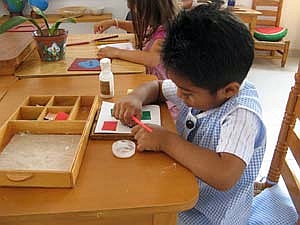
“El niño, con su enorme potencial físico e intelectual, es un milagro frente a nosotros. Este hecho debe ser transmitido a todos los padres, educadores y personas interesadas en niños, porque la educación desde el comienzo de la vida podría cambiar verdaderamente el presente y futuro de la sociedad.
Tenemos que tener claro, eso sí, que el desarrollo del potencial humano no está determinado por nosotros. Solo podemos servir al desarrollo del niño, pues este se realiza en un espacio en el que hay leyes que rigen el funcionamiento de cada ser humano y cada desarrollo tiene que estar en armonía con todo el mundo que nos rodea y con todo el universo.”
La mente absobente,
María Montessori.
¿Te gustaría ser Guía Montessori? Cursos AMI para Casa de los Niños en Cancún
Los comentarios están cerrados.
Cuando hay amor: Una anécdota
En la primera edición de su libro La Mente Abosrbente, la Dra. Montessori nos relata la anécdota divertida de un hombre joven que buscaba esposa.
 Por supuesto, las ofertas no eran pocas, las jóvenes que deseaban casarse con el apuesto y bien posicionado joven eran muchas, así que, al momento de tomar una elección para empezar a frecuentar a una de ellas, el jóven comenzó a preguntar referencias sobre las candidatas.
Entre tantas chicas, una destacaba por sus cualidades. De ella se decía que contaba con una extremada buena educación. El joven a quien se le hacía la oferta dijo: “eso no cuenta” y escribió un cero delante del nombre de la señorita en cuestión.
Alguien más opinó: “esta novia es la más hermosa de todas las doncellas”, mas la respuesta del joven fue: “eso no cuenta_cero”. Después, uno más dijo: “es una intérprete de lo más lograda, cantará y tranquilizará sus nervios además de que entretendrá a sus invitados”; otra vez él dijo: “nada, no vale nada”.
Luego alguien tuvo la brillante idea de decir: “tiene la piel más tersa de todas las pieles”, a lo que él contestó: “nada” y otro dijo “es una excelente cocinera, elabora exquisitas delicias culinarias”, nuevamente “nada”. “Maneja excelentemente, lo llevará y lo recogerá” y una vez más registró otro cero delante del nombre de la posible novia. “Es una artista en decoración de interiores y en el arreglo persona”, tampoco se impresionó: “cero”.
Así siguieron enumerando muchas cualiades de esta joven, pero al final de todas estas cosas de las que decía que no significaban nada, alguien dijo “es la más amorosa de todos los seres”. El joven se quedó pensativo por un momento y dijo: “eso es algo”, después escribió un uno a la izquierda de todos los ceros que había anotado frente al nombre de la doncella.
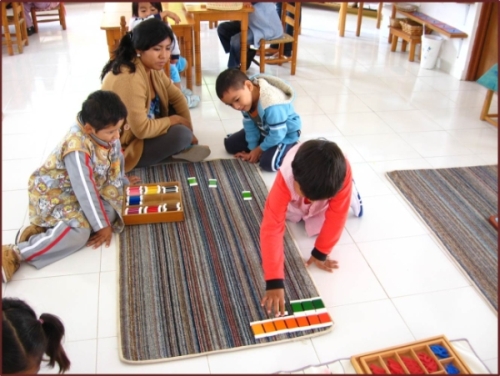 A partir de esa cualidad, todos los logros y cualidades que no habían sido tomadas en cuenta, tomaban valor de ese uno. El valor de esa joven que parecía nulo, cuando se mencionó esa palabra redentora, se volvió infinitamente grande.
De esta forma sucede también con la civilización, todos los logros son nada y conducen a la destrucción, pero si hay amor, adquieren un gran valor.
Los comentarios están cerrados.
Niños… un valioso tesoro
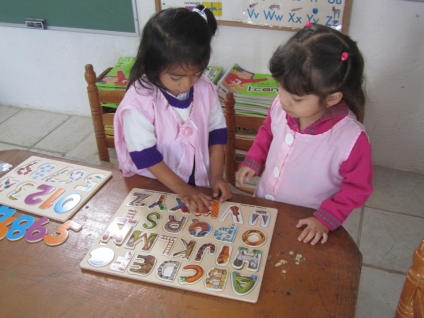 “El niño, tal como debería ser: un trabajador incansable, un niño tranqilo que se esfuerza al máximo, que intenta ayudar a los más débiles sin olvidar que debe respetar la independencia de los demás; ciertamente, el verdadero niño.
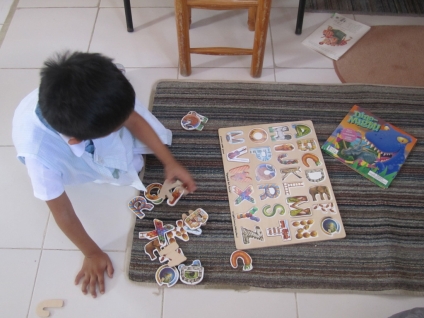
La infancia es un estad de constante crecimiento y transformación; la dinámica de la vida interiorconstantemente implusa al niño a nuevas conquistas, cuatitativas y cualitativas; mientras que el adulto es impulsado más bien a preservar o que ha adquirido.”
Educar para un Mundo Nuevo.
María Montessori
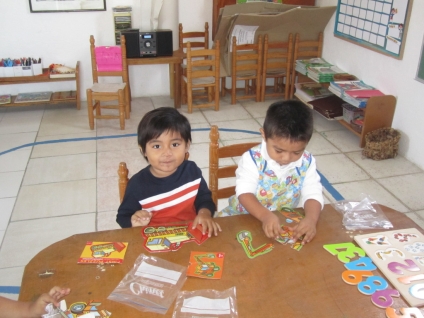
Fotos: Cortesía de Anne Gayley Gabbert
Maestra de inglés, Casa de los Niños.
Los comentarios están cerrados.
Infancia y sociedad, el placer de la convivencia
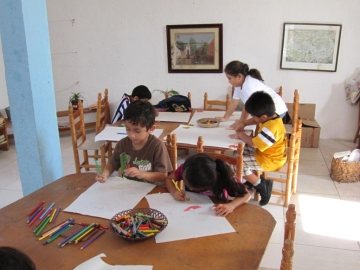 De acuerdo con Montessori, en la educación infantil reside el secreto para resolver los problemas de la convivencia entre los hombres. Esos problemas políticos que se presentan, anudados a los de la búsqueda de frentes de energía, como problemas de época pueden comenzar a encontrar una solución en la relación humana mínima de una pequeña sociedad de niños. En Montessori resuena la misma preocupación de un maestro de etología: “la necesidad de comprendernos a nosotros mismos nunca ha sido tan imperiosa como hoy, porque una humanidad dividida por los conflictos ideológicos y en lucha por la sobrevivencia. El hombre, creatura que está en grado de mandar sondas a
Marte y Venus y de transmitir desde el cosmos imágenes de Saturno y Júpiter, es impotente frente a sus propios problemas sociales… Siempre tratando de alcanzar la paz y siempre enredado en conflictos, mientras que el control de la población parece resbalársele de las manos”.
 Las relaciones humanas, aquellas que abstractamente y teóricamente son llamadas relaciones yo-los otros, se caracterizan por la ambivalencia “Ne tecum ne sine e vivere possumus”: el epigrama de Marziale nos da muy bien la idea de contrariedad de la relación del hombre con el hombre. El hombre tiene la necesidad de otro hombre, pero corre siempre riesgos, es un reto, en cada caso representa siempre un problema. Vale para las relaciones humanas, la anécdota que cuenta Schopenahuer sobre dos puercoespines: sorprendidos por el frío del invierno los dos animalitos se refugiaron juntos en una madriguera, pero… si estaban muy juntos se picaban y si estaban lejos porían de frío; el conflicto de la vecindad y la soledad y lejanía. Y, sin embargo, el hombre posee códigos de comunicación analógica, ya sea de comunicación numérica, otros de comunicación verbal o no verbal; es más, ¡es el inico organismo conocido que use módulos de comunicación analógica o numérica! Es como dicta el primer axioma de la pragmática de la comunicación humana: “no se puede no comunicar”. Entonces, la relación puede favorecer a estos potentes módulos comunicativos. Pero ¿por qué es tan fácil comunicar y es tan difícil comprender? Esto puede suceder porque existe en la comunicación humana un elemento perenne de inquietud que hace de la comunicación un evento altamente improbable. En el paraíso del entendimiento, sostiene N. Luhmann, se anida siempre la serpiente del desconocimiento y la frialdad. Ya Hegel había sostenido que es difícil tener algo en común en la cuarta interiorización de la consciencia, eso expone a la paradoja que la sinceridad puede ser incomunicable, porque en el momento en que se convierte en pragmática, viene planeada y pierde parte de la inmediatez necesaria para la sinceridad.
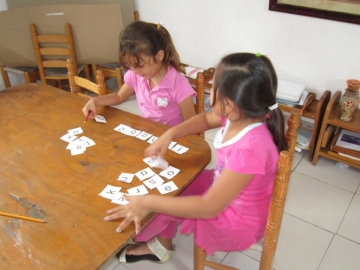 Partimos de la presunción de ser comprendidos más de lo que en verdad somos. En realidad nunca estamos verdaderamente seguros de que aquello que queríamos comunicar fue interpretado y recibido correctamente en su
totalidad. Es por ello que la comunicación oscila entre la necesidad que tenemos del otro, porque no hay un YO sin un TÚ, lo que lleva a la conclusión de que la experiencia no es un hecho solitario; se queda como un enigma, un reto, un riesgo, un problema, porque, como ser humano, no se es jamás banal.
Encontrar a otro quiere decir poder despertar del enigma. Esto se debe al hecho de que en el centro de cada persona hay un elemento no comunicado, constantemente desconocido, inviolable Por esta razón, en parte, cada hombre
permanece como un extraño para sí mismo, es este el silencio central que nace justamente de la posibilidad de comunicación. Tal vez aquello que queda por hacer es una infinita aproximación, un continuo ejercicio de descubrimiento del otro y de uno mismo.
Texto: Raniero Regni Infancia y sociedad en María Montessori, el niño padre del hombre
Fotografías: Anne Gayley Gabbert, maestra de inglés de Otoch Paal
Los comentarios están cerrados.
Comentarios recientes